Category: Blog

  • Why More Warehouse Racking May Be Needed For Food Imports

    Why More Warehouse Racking May Be Needed For Food Imports

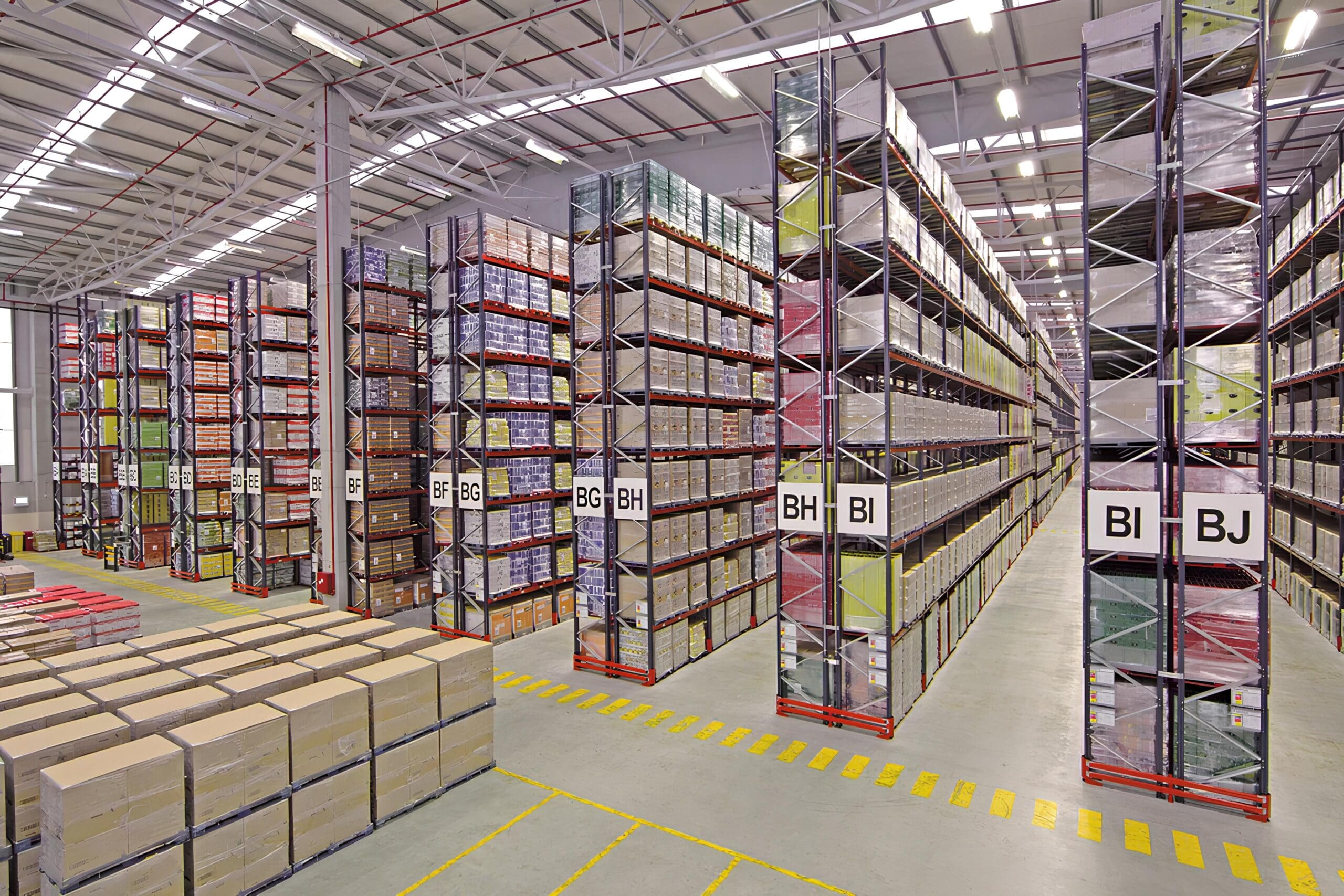
    The key to warehouse capacity does not just lie in floor space. To make the most of the potential storage available, the right kind of apparatus needs to be in place to support the crates, pallets, or sacks that will be located there.

    Having efficient warehouse racking can be particularly invaluable when demand for particular products rises and finding extra storage space is necessary. While firms may seek to hire or build more warehouses, this can be expensive, the available floor space may not be conveniently located, and any new build is by definition not a quick fix.

    More and better racking, therefore, is important for tackling real-life situations that can impact various sectors, one of which may arise over the next 12 months.

    A report in the Daily Telegraph has highlighted concerns by farmers that the persistent and heavy rain from one of the dampest winters on record could prove more than just a pest for anyone stepping outside much in recent months. With several major storms and widespread flooding, some farms have been so disrupted they may have no harvest this year.

    The paper notes that this will be the first time since 1945 for some farms if this happens, with the Agriculture and Horticulture Development Board predicting a fall in wheat yields of 15 per cent, while winter barley is set to be down 22 per cent and oilseed rape by 28 per cent.

    Speaking to the paper, Joe Stanley, a farmer in Leicestershire, warned that his land will be one of those farms unable to produce crops for the first time since the war if there isn’t a major change in the weather.

    “Unless it basically stops raining today and then it becomes nice and sunny and windy, we’re not going to get any crops in this year. That’s a real danger,” he remarked.

    If domestic produce falls, that means the shortfall will need to be made up by imports, although this could be more expensive due to higher demand and the possibility that other countries may have their own weather-related poor harvests.

    Importing more food requires more storage at ports and distribution centres before it can make its way to processing plants or shops. This is where warehouse operators will need to act to find ways of raising their storage capacity, except when local storage space freed up by falling domestic production can be repurposed.

    This kind of issue can apply to all sorts of goods, not just agricultural, and not just warehouses; for example, the UK had to reopen Centrica’s mothballed Rough Storage facility to bolster Britain’s gas supplies over the last two winters.  

    Indeed, all kinds of items need to be stocked up in greater numbers at times. An example will be building materials if signs the construction sector is recovering are authentic (the S&P Global UK Construction Purchasing Managers’ Index has just recorded its first month of growth in six months, with a slight uptick in March).

    The overriding point is that whatever kind of goods your warehouse may stock, significant increases in demand can put your storage capacity under strain. With the right sort of racking to make the very most of the room you have, this problem can be resolved.
  • Top Five Points To Consider When Designing A Warehouse

    Top Five Points To Consider When Designing A Warehouse

    Purpose is at the centre of any warehouse design, and more than perhaps any other building a business may have, their warehouse storage layout must be developed in order to meet the particular needs of the business now and as far in the future as can be foreseen.

    The warehouse is the most important part of your facility to get right, as inefficiencies in moving materials in and out of it can have a dramatic impact on your business.

    With that in mind, here are the five biggest points to consider when designing your warehouse.

    Workflow

    The first step when designing a warehouse space is to consider the journey the stock will make from their arrival until their departure.

    Often this will involve exploring the movement of staff and stock throughout the warehouse space and aiming to limit the amount of time and space from one step to the next, as well as ensuring that warehouses run in just one direction

    The simpler and shorter each stage of the process is, the more efficient and safe it will be, saving a lot of money in the long run.

    Equipment Space

    Each stage of your warehouse’s workflow will have some form of equipment use, and in order for the warehouse to be managed effectively, that space needs to be taken into account.

    Whilst this primarily factors in equipment needed for picking and packing, manufacture, finishing and other stages of the fulfilment process, it also includes space for forklifts to travel, racking and shelving for inventory and storage space to ensure moving equipment is kept secure.

    Movement Flow

    Ultimately, staff need to have the ability to move freely and safely around your facility without obstructions or arduous routes. The clearer, simpler and more straightforward your safe productivity routes are, the less risk of an accident caused by an error.

    Capacity And Slotting

    Depending on the project, there may or may not be a hard limit on the volume of space a designer can use to make an ideal warehouse, but it is essential that this space is used as efficiently as possible.

    This can sometimes lead to compromises between maximising the amount of horizontal and vertical space used and ensuring that everything that needs to be regularly accessed is within easy reach of employees, such as by ensuring that reach trucks can be safely driven between the aisles.

    Room To Grow

    Nobody will truly know what the future holds, least of all in business, but a new warehouse design should allow for the possibility that a company may need to pivot or expand, and making these changes as simple as possible removes the need to start from scratch.

    For example, seasonal businesses should always build for their peak periods to avoid disruption to the business and use the excess space flexibly at times when the warehouse is not at 100 per cent capacity.

    The alternative is either a need to regularly radically reorganise the warehouse space, lease additional storage from elsewhere at considerable extra cost or utilise other company buildings as inefficient, expensive storage.

  • How High Should You Build Your Warehouse Shelving?

    How High Should You Build Your Warehouse Shelving?

    A warehouse storage system should be appropriate, versatile, durable and fit for the space it is being constructed in, and for many businesses, the length, width and height of shelving and racking solutions will be based on the size of the building they are being constructed in.

    However, other businesses ordering shelving to be installed alongside the construction of a warehouse building will have a clean slate on which to design their optimal storage system, with the potential for towering racks of inventory at a quite remarkable height.

    This means that the major question about your shelving and racking height is not necessarily how tall you can build it but how high you should install it and it still remains practical, safe and fit for purpose.

    Here are just a few factors that will go into this difficult decision.

    Building Height Limits

    Ultimately the most restrictive limit to the height of a shelving system is the height of the building it is in, and the limits to the height of any industrial building will be subject to legislation and planning guidelines.

    In order to avoid a requirement to apply for planning permission, new industrial buildings, including warehouses, must be either lower than the tallest building on the land it is set to be built on or lower than 15 metres, whichever figure is lower.

    This means a limit to indoor storage of just under 50 feet, discounting the depth of the roofing in question, room to actually lift and move high-stacked pallets, lighting and sprinkler systems, so any shelving without express permission otherwise will be under that size as well.

    Forklift Reach

    The only way warehouse storage functions effectively is thanks to the development of narrow aisle forklifts, and their widespread proliferation starting in the late 1950s made the modern warehouse and modern pallet racking possible.

    This means that another major limit to how tall the shelving units can be will be the maximum reach height of the fleet of forklifts the business uses.

    High, narrow aisle forklifts can reach over 16.5 metres high (55 feet), but in practice, most forklifts are more likely to have a reach capacity of lower than 5 metres (15 feet).

    Whether the added expense of extended-reach trucks is worth the space-saving will depend on each business, and in some cases, there may be diminishing returns if the cost of specialist equipment is higher than the money saved in a larger floor plan.

    Types Of Products

    Certain products are best stored in certain locations than others, with conventionally shaped equipment that needs to be rarely accessed being the most suitable inventory for high warehouse storage.

    By contrast, unusually shaped inventory, and stock that is regularly used or is flying off the shelves should be as low as possible to facilitate a fast turnaround, otherwise, the money saved through efficient warehouse design could be wasted through inefficient warehouse workflow implementation.

    Higher shelving is best suited for archival and storage purposes, where it will only need to be accessed quite rarely in order to save time.

  • Top Four Uses For Pallet Racking

    Top Four Uses For Pallet Racking

    Of the most fundamental parts of the modern warehouse, pallet racking is by far the biggest and perhaps the most underappreciated.

    Part of this is, unlike the forklift and the pallet itself, racking systems stay largely static whilst inventory moves around it at a frenetic pace, much like how people tend to notice the objects moving around on their desk more than the desk itself.

    Because of this, as well as the ubiquity of pallet racking given that practically every warehouse needs it, it can sometimes be easy to forget just how versatile pallet racking is.

    With that in mind, here are five of the most important, most unique and most unusual uses for pallet racking systems.


    Extremely Efficient Storage

    The reason why pallet racking is so important in the first place is that it is the most efficient way to store vast amounts of inventory.

    Building a warehouse higher is much cheaper than building outward because whilst you need to pay for every extra piece of square footage your warehouse takes up, you can build a warehouse from the earth to the heavens, at least in theory.

    Efficient, secure shelving units, increasingly capable forklifts and the ease of pallet transport make it possible to build warehouses that stretch as high as the capabilities of rack storage and forklifts.


    Big Box Retail Warehouse

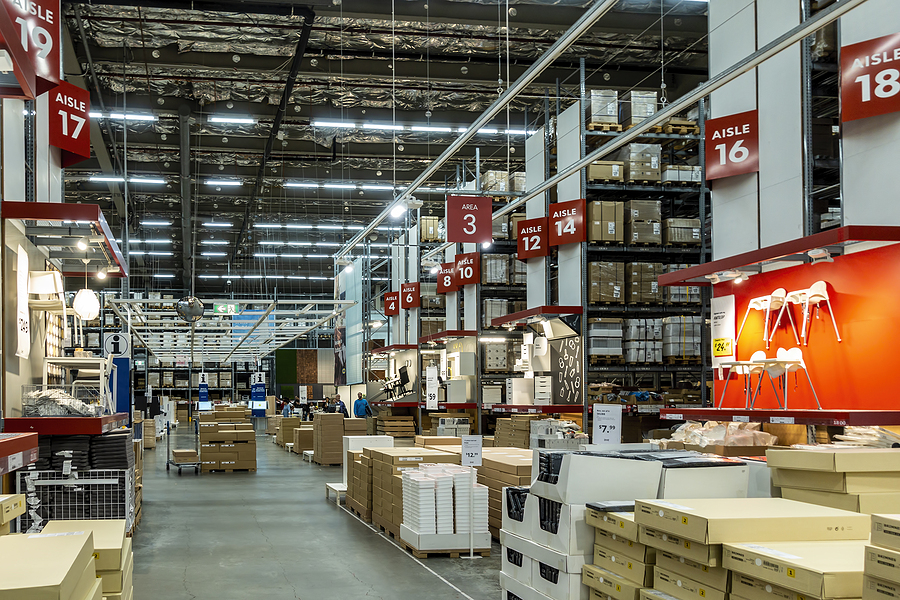
    Whilst most retail shelving tends to use a myriad of different shelving systems, one of the most interesting and most common is the use of pallet racking to create a retail warehouse, also known as a “big box” store.

    These types of large stores, often found in shopping centres and retail parks, are logistically similar to other types of warehouses without trying to hide the aesthetic resemblance. Instead, inventory is typically arranged from floor to ceiling.

    The idea behind a retail warehouse both in practice and in marketing is that by converging the storage and sale of goods in the same building, storage costs are lowered, which are in turn passed along to the consumer.


    Warehouse Club

    Similar to a big-box store, a warehouse club is a wholesale retailer that stores goods on pallets and pallet racking in its retail-ready packaging, and because of the lack of additional laying out, amenities and facilities, they can offer significantly cheaper prices as a result, even more so than a retail warehouse store.

    The typical difference between the two is that a warehouse club will often require a membership, which is typically restricted to small businesses.

    Both typically use cash and carry systems, where customers will pay at the warehouse and arrange their own delivery, rather than having their goods delivered from a typical warehouse.

    Pallet racking is essential both practically and aesthetically, as the rack shelving works effectively as no-frills retail shelving.


    Dark Supermarket

    Also known as a fulfilment centre, a dark supermarket is a warehouse where ordered goods are picked, packed and shipped to a large number of customers using an exceptionally efficient range of rack shelving and computer-aided logistics.

    They can save money compared to a typical warehouse by reducing the need for a customer-friendly store layout and as long as there are access roads can be implemented practically anywhere.

  • The Durability Of Pallet Racking

    The Durability Of Pallet Racking

    The key to successful logistics operations is efficiency and streamlined processes, both of which are highly dependent on pallet racking systems.

    A core component of containerisation alongside the forklift, the shipping container and the wooden pallet, a pallet racking system is a storage optimisation system that takes advantage of vertical space and the easy movement of goods attached to pallets to store and retrieve them as required.

    There are a lot of different types of pallet racking systems out there, but ultimately for many operators of warehouses and other logistic centres, the three factors that matter most for any racking are whether it is a good investment, is fit for purpose and how long it will last.

    Each point feeds into the others, and the question of durability is dependent on a wide range of factors, including how suitable the particular system is to a particular workflow, how intensely it is used, the quality of the system and a range of other factors.

    What Affects The Durability Of Pallet Racking?

    It is more difficult than one might expect to calculate the exact lifespan of a pallet racking system, simply because this figure is exceptionally variable.

    If used properly in an optimum environment, a well-made pallet racking system can last decades, but the lifespan of its durability is based on a wide range of different factors.

    The first is how intensely it is used and particularly how its load capacity is managed. This will typically be clearly noted by the manufacturer and be one of the main components that will be inspected.

    As well as this, it is not just the loads that are placed on the racking but the intensity that goods are put on and taken off the racking, which can subject the frame to particular types of loads.

    Ensuring that the racking is used correctly through rigorous training, safety signs, and the installation of mesh and barriers that stop accidental collisions is key to ensuring the continued safe usage of the equipment.

    Next, the quality of the materials and how they are installed is critical. The frame needs to be made of a particularly strong material such as steel, designed in a way to maximises its load capacity and safety.

    Alongside this, the quality of the design can be all for nothing if it is not installed correctly.

    Improper or inadequate installation and securing of the different components of the racking system can lead to loads being inappropriately spread throughout the system, increasing the risk of a potentially catastrophic failure.

    This also includes regular inspection routines, where bolts are tightened, damaged components are identified and replaced, and concerns such as corrosion or impact damage can be addressed.

    Alongside these factors are more environmental factors that can affect durability, such as air quality, humidity and corrosion risks, which can deplete the racking of its ability to fulfil its purpose.

    The telltale signs to look out for that suggest a racking system may be at risk of failure are uprights that are bent or twisted, beams that are loose or cracked, loads not distributed evenly on the beams and any evidence of rust or other damage.

  • The Safety Measures Required For Longspan Shelving

    The Safety Measures Required For Longspan Shelving

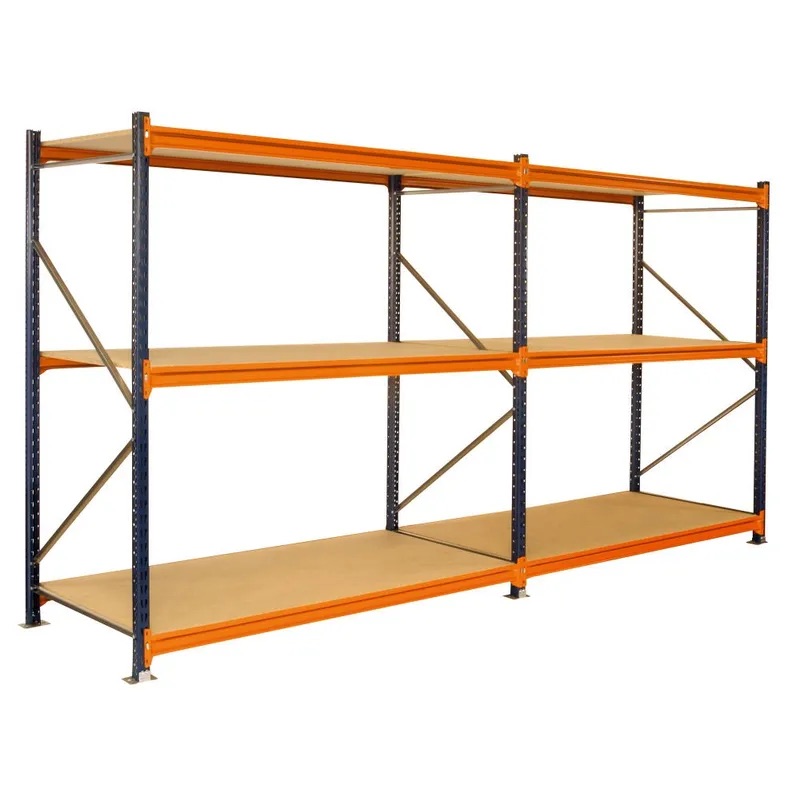
    Longspan shelving provides a great storage solution for warehouses, making efficient use of the space available, so as many goods can be stored as possible. 

    However, it is important that safety measures are taken when installing the units, as well as using them. 

    How to install longspan shelving safely

    Firstly, longspan shelving needs to be fitted in straight lines to ensure it is connected together correctly. 

    When the frame height to depth ratio exceeds 4:1, or there is a risk of the shelving becoming unstable, or the top shelf is higher than a reasonably reachable height, it should be anchored to the floor. 

    This ensures the shelving unit is secure, no matter how tall it is or the weight of the load it has to carry. 

    When installing a longspan shelving unit in a warehouse, it is also essential not to put it so it covers fire exits or doorways. These need to be kept clear at all times so staff can escape the building if they are in danger.

    It should also never exceed height restrictions, as this could lead to it collapsing, and it is worth checking the floor quality to check it is able to support the weight of the unit when it is fully loaded.

    The aisle between the shelves also needs to be kept wide enough to allow equipment such as forklifts, trolleys and warehouse steps to fit. 

    How to load it safely

    It is important that workers are fully aware and understand the unit’s load capacity. This can be done by displaying safety signs at the end of the racks with the maximum shelf weight on. 

    Workers should be reminded to distribute the goods on the shelf evenly, putting the heaviest ones on the bottom shelves and loading these first. 

    Keeping the lighter loads on the higher shelves prevents the unit from becoming imbalanced and potentially toppling over, and reduces the risk of the worker straining or causing themselves an injury. 

    The shelves need to be kept tidy at all times, and overcrowding of items should be avoided. This enables staff to access the items safely and pull them off the shelves without knocking other items over.

    It is also essential that boxes are not placed on the shelf so they overhang, as this increases their chances of falling over, and can make the unit more likely to tip.

    When fitting the shelves, it is important they remain accessible and are not too high. If the unit exceeds a reachable height, other appliances need to be provided to safely remove the goods from the higher shelves.

    Hazardous substances should also be clearly marked, stored in appropriate containers and kept separated from other wastes. 

    Employers have a duty of care to ensure their workers are in a safe environment by maintaining the longspan shelving to prevent dangerous faults, as this could cause serious injuries. 

    This is part of the Health and Safety at Work Act (1974) – Section 2, the Workplace, Health, Safety and Welfare Regulations 1992, the Provision and Use of Work Equipment Regulations 1998 (PUWER) and the HSE Warehouse and Storage Safety Guide HS (G) 76. 

    So it is essential that bosses check for damaged frames or posts, deformed beams, missing bolts or beam locking pins and bent braces regularly to make sure the equipment remains safe for staff to use. 

  • Why Efficient Use Of Space Matters For Stockroom Shelving

    Why Efficient Use Of Space Matters For Stockroom Shelving

    For anyone with a stockroom, shelving is an essential part of the efficient use of space. This ought to be a no-brainer, of course; unless you have rented out some huge space that is way too large (which means you are paying too much), you will need to make the most of what you have got.

    Indeed, you might find after a while that if business is picking up and you need to get more items in storage, space may become at a premium. While there may be a point where you can’t squeeze any more in and you need to move to larger premises (or add extra storage somewhere else), you can do a lot to maximise space with the right shelving.

    Those in the storage and warehousing industry know this very well. The advice you receive will cover various steps you can take to improve the use of space and these are all potentially valuable tips. Whether adding a mezzanine floor, racking up shelves higher, or reducing aisle space between shelves, there are many ways to do it.

    This is why our stockroom shelving is designed to be flexible in ways that enable you to maximise space, not least the capacity to stack them high so you can make the most of your vertical space as well as lateral room.

    You can also choose from wide-span or long-span shelving to improve lateral use of space, depending on the dimensions of the things you stock.

    This flexibility is also useful should you find you need to move some or all of your storage.

    This can happen for various reasons. You may find the lease has run out and you must move to new premises with different dimensions in terms of floor space and vertical space. Or you may be moving somewhere larger and will find the kind of shelving you have obtained from us can be adjusted very easily to the new facility.

    Another consideration is that of business continuity. Every firm needs to have a contingency plan for the emergence of circumstances in which normal operations on its premises are impossible, common examples being fire or flood.

    While IT-based services can now be carried out remotely by most, not least thanks to the capacity for remote working established during the Covid lockdowns, physical elements like the storage of goods still require a response. If your storage area is damaged or otherwise out of action, you may need a rapid response to move stock to a safe place.

    If you have flexible shelving that can scale up or down to suit the new space you remove it to, that means there will be a wider array of possibilities of where you can manage to accommodate everything.

    Alternatively, you can invest in new shelving when you have to make a sudden move so that you can quickly manage the space you are using. This may be a particularly adept step when you are acting in a position of emergency when you have had to move fast and the facility you can get your hands on is not an optimal choice.

    Thankfully, with the flexible shelving options we offer, you can find a solution that works for you every time.

  • A Quick Guide To Longspan Shelving

    A Quick Guide To Longspan Shelving

    The trick to increasing the amount of stock businesses can keep in a warehouse, factory, workshop or store cupboard is to improve the storage solution. One of the best racks to go for is longspan shelving.

    To find out more about why this could be the answer to your warehouse storage optimisation problems, read on. 

    • Easy to assemble

    If you need to set up a storage unit quickly and easily, longspan shelving is the answer, as starter bays can be built in next to no time. Then as you accumulate more goods and need a greater amount of storage space, you can simply enlarge the shelving by getting extension packages.

    This enables you to grow your storage units as your business grows, so you are not having to invest too heavily in shelving that you do not fully need yet. 

    • Stores bulky goods

    Longspan shelving is ideal for storing large, bulky goods, as you can fit the shelves where you need them. Therefore, if your items are really tall, you are not restricted on height, as you can create the longspan shelving you need. 

    Additionally, when buying the frame, you can choose the length of the shelves, as well as their depth. Sizes vary between 1m to 2.7m in length, and 40cm to 1.2m in depth. Therefore, you can choose dimensions that are not only perfect for the type of goods you wish to store, but also fits well in the space you have available. 

    • Ideal for heavy goods

    It is not just bulky goods that longspan shelving is good for, but heavy items too. It can handle extreme weights, holding up to 800kg on its shelves.

    Therefore, you can store large, heavy goods on each shelf, such as machinery or furniture. 

    However, it is also good for holding lots of smaller products that collectively end up weighing a lot. As items held on longspan shelving tend to be fragile or have an irregular shape, and therefore, cannot be stored on pallet racks and moved around by forklifts, they might be positioned individually on the shelves.

    For instance, tyres, office supplies, clothes and batteries are often items that are kept on longspan shelving. Although individually they might not weigh a lot, their weight quickly adds up when they are stored in high quantities. 

    • Durable

    Perhaps the biggest advantage of using longspan shelving is that they are highly durable. 

    As they are made of lightweight materials, they can easily be moved around without getting damaged. Therefore, they are more likely to last a long time. 

    Despite their light weight, they are also incredibly strong, so you can be confident they will not buckle under heavy loads.

    How to keep longspan shelving safe to use?

    If the frame height to depth ratio exceeds 4:1, it is wise to bolt the shelving to the floor to reduce the risk of it falling. 

    For instance, if the shelving is not handled correctly or if heavy loads are placed high up first, this can make the system unstable. 

    It should also be anchored to the ground if the top shelf is not easily reachable, as this prevents the unit toppling over if people are trying to grab an object placed up high.  

  • All You Need To Know About Pallet Racking

    All You Need To Know About Pallet Racking

    There are three critical components to modern logistics, and all three of which are so ubiquitous that they often do not receive the credit they deserve for shaping the warehouse as we know it today: the electric forklift, the standardised wooden pallet and pallet racking shelving.

    Whilst all three components were developed largely independently in the first half of the 20th century, they would rapidly evolve in tandem with each other after the Second World War and the rapid logistical developments that were brought about as a consequence.

    However, whilst pallets and forklifts allow for larger quantities of product to be transported more efficiently, pallet racking allows goods and materials to be stored far more efficiently and solves a fundamental problem with scaling up warehouse operations.

    Here is everything you need to know about pallet racks, from their purpose, different types of racking, their advantages and the considerations needed to make the most of them.


    What Is Pallet Racking For?

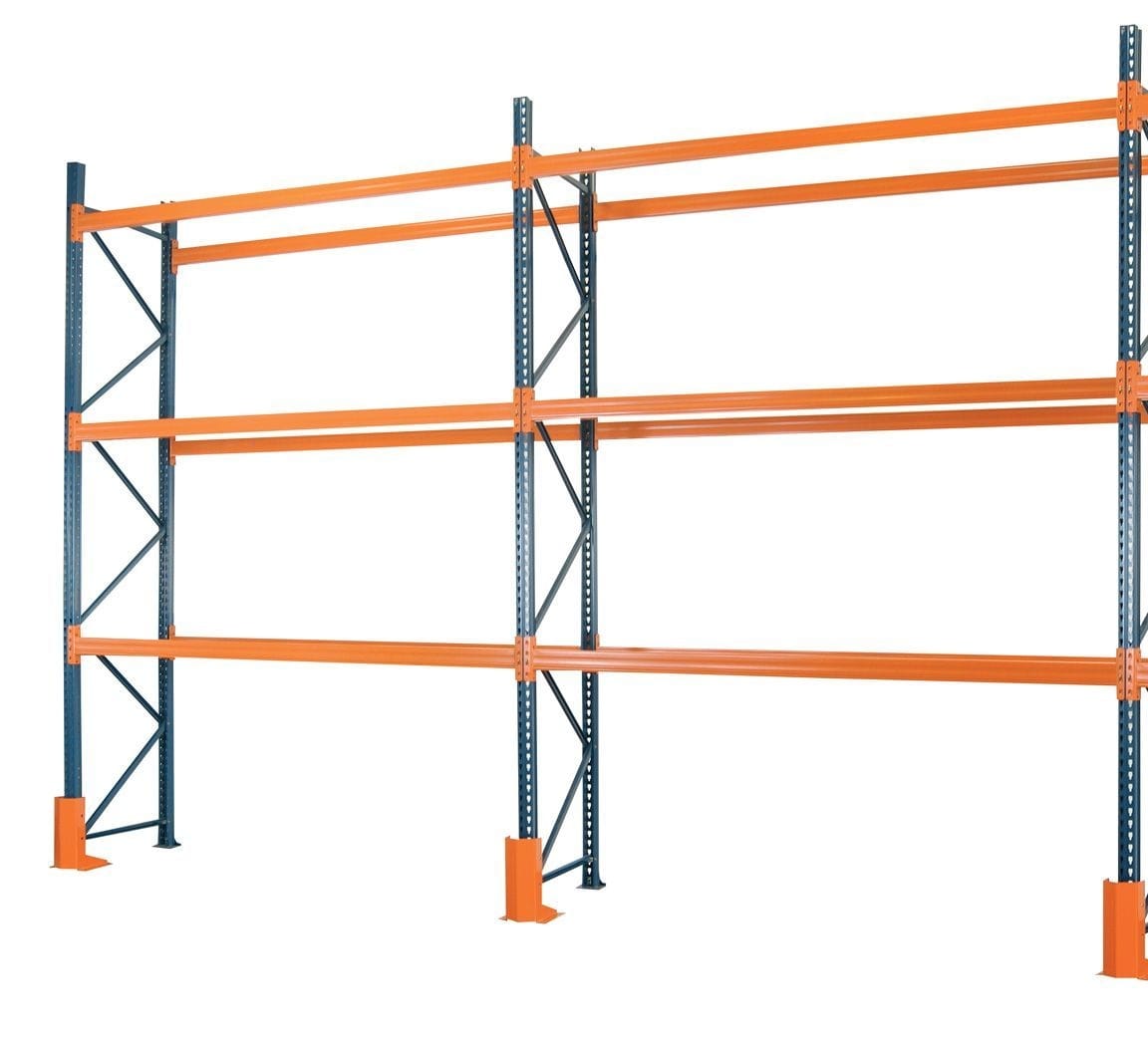
    Pallet racking is a type of shelving system specifically designed to store goods on wooden pallets, almost invariably used in distribution centres and warehouses, although some big box retailers also use pallet racking systems to store and display products for consumers to buy.

    It consists of a series of high-strength horizontal and vertical metal beams to create a support frame that pallets can be directly placed on and taken off of by forklifts to fit the logistical workflow of the warehouse, distribution or fulfilment centre.


    What Types Of Pallet Racking Exist?

    There are a lot of different forms of pallet racking out there, designed with the optimisation of space and the meeting of storage needs firmly in mind:

    • Selective – The most common type, selective racking is made up of a series of adjustable frames and beams that allow a forklift to access every pallet and adjust for product sizes.
    • Double-Deep – Similar in design to selective racking, the two-deep system reduces the number of aisles but requires extended-reach forklifts for access.
    • Drive-In/Drive-Through – This type of racking allows forklifts to drive directly onto the racks themselves, maximising potential storage density, with the difference being that drive-through racking has an entrance at one side of a bay and an exit on the other.
    • Push-Back – An efficient Last In, First Out (LIFO) system, push-back racking loads pallets onto carts that push existing pallets back.
    • Flow – Flow racking is a First In, First Out system that loads pallets at one end and uses inclines and rollers to move them from one end of the warehouse to another (typically from loading to picking).
    • Cantilever – A versatile system designed for bulkier and longer items, cantilever racks have additional arms extending outward from the columns.

    What Are The Advantages? 

    The reason why pallet racking systems exist in the first place is that they allow for the most optimal and efficient storage of materials possible.

    Thanks to the principle of “from the earth to the heavens” found in property law, the most affordable way to expand a warehouse’s capacity is to build as high as you can feasibly store materials, using forklifts to carry goods up and down the racks.

    Pallet racks are also adaptable, being able to fit different scales of product and adapt rapidly to changes in the needs of the business, as well as providing a systemic, safer approach to inventory management.

  • How The World’s Oldest Bookshelf Inspired Modern Warehouses

    How The World’s Oldest Bookshelf Inspired Modern Warehouses

    When it comes to modern warehouses, the only way to store ever-increasing volumes of product is to stack them at increasing heights, which requires exceptionally robust and heavy duty shelving to work properly.

    Ensuring that this remains possible requires businesses to look not only at the opportunities of the future but the lessons of the past, and one of the most unique use cases for strong shelving units was in the storage of early works of literature.

    One of the most interesting quirks of the history of shelving is that the need for a heavy-duty bookshelf predates the invention of the codex, the shape and form of the book that is ubiquitous today.

    If anything, early libraries highlighted the need for a robust shelving solution even more, given that records were typically stored on stone or clay tablets in considerable volumes and of considerable weight, closer to the weight of bulk warehouse products than modern paperbacks.

    One of these early bookshelves was so robust and protective that it not only survived the destruction of the palace it was based in but also preserved some of the earliest written works in human history long after the civilisation that forged them was burned to the ground.

    The Library Of The Palace Of Ebla

    Ebla is an ancient city in what is now Northwest Syria, and its discovery highlighted the existence of other ancient civilisations besides Mesopotamia and Ancient Egypt.

    Centrally located in the Ancient Near East, it proved to be a major trade centre, and producer of a wide range of exports itself, giving itself considerable power in the region until a century-long war with Mari led to a decline and eventual destruction of the kingdom.

    Because of its importance for trade, records of transactions, inventories, kings, place names and descriptions of relationships with other cities in the Levant.

    At the time, these would have been stored on clay tablets, imprinted when wet with a reed stylus before being dried in the sun, making them fragile but dry and able to store information on partly recessed shelves at such an angle that the first few words could be seen at a glance.

    This makes it one of the earliest organised library systems in history, and this storage archive was housed next to other, larger repositories that stored necessary literary, ritualistic and educational tablets, including those required by young scribes to learn the trade.

    The tablets were written both in Sumerian, one of the oldest written languages in history, as well as a phonetic language using the same characters that transcribed the phonemes used in the language of Ebla, later known as Eblaite.

    The particular structure of the shelving was the biggest reason why the tablets survived to provide so much insight into early civilisations today.

    At some point around 2250 BC, Ebla was destroyed, the palace holding the royal archive burned to the ground for reasons still speculated to this day, with either Sargon of Akkad, Eannatum of Lagash, Lugalzagesi of Umma, Isqi-Mari or a natural disaster causing the fires.

    This, theoretically, should have meant that this vast archive would be destroyed, but the shelving collapsed in such a way that protected the tablets and also simultaneously baked them in the searing heat, making them much harder and more durable.

    This means that the world’s oldest library bookshelf not only was robust enough to hold hundreds of clay tablets but managed to protect them so completely that they survived for millennia before being discovered by Paolo Matthiae and his team.

    It also highlights the hidden importance of artefacts that are not found in museums. The shelves in question have tragically been lost to time, although in their destruction they preserved vital history that could have been lost.

    Shelves help people get access to the resources they need to build the future, but they also managed to preserve the past, and the influence of these ancient repositories on modern warehouse shelving cannot be understated.