Category: Blog

  • Best Storage Solutions for E-Commerce Warehouses

    Best Storage Solutions for E-Commerce Warehouses

    The best storage solutions for eCommerce warehouses combine high capacity storage with fast product access. Most operations benefit from a mix of pallet racking for bulk inventory and longspan racking for picking locations. The right layout improves fulfilment speed, reduces handling time and helps businesses scale without constant disruption.


    As online retail continues to grow, warehouse efficiency matters more than ever.


    According to the Office for National Statistics, online sales now account for a significant share of UK retail spending. That puts pressure on eCommerce warehouses to process orders faster while managing growing product ranges and fluctuating stock levels.


    Storage systems need to support that pace without creating bottlenecks.


    Why eCommerce warehouses need different storage strategies


    Traditional warehousing often focuses on bulk storage and pallet movement. eCommerce warehouses are different.


    Most operations handle high SKU counts, rapid stock rotation and frequent picking. Products may range from small accessories to larger boxed items, all within the same facility.


    That creates two priorities. First, maximise storage density. Second, maintain fast and accurate access to stock.


    The most effective warehouse layouts balance both.

    Pallet racking for bulk inventory storage


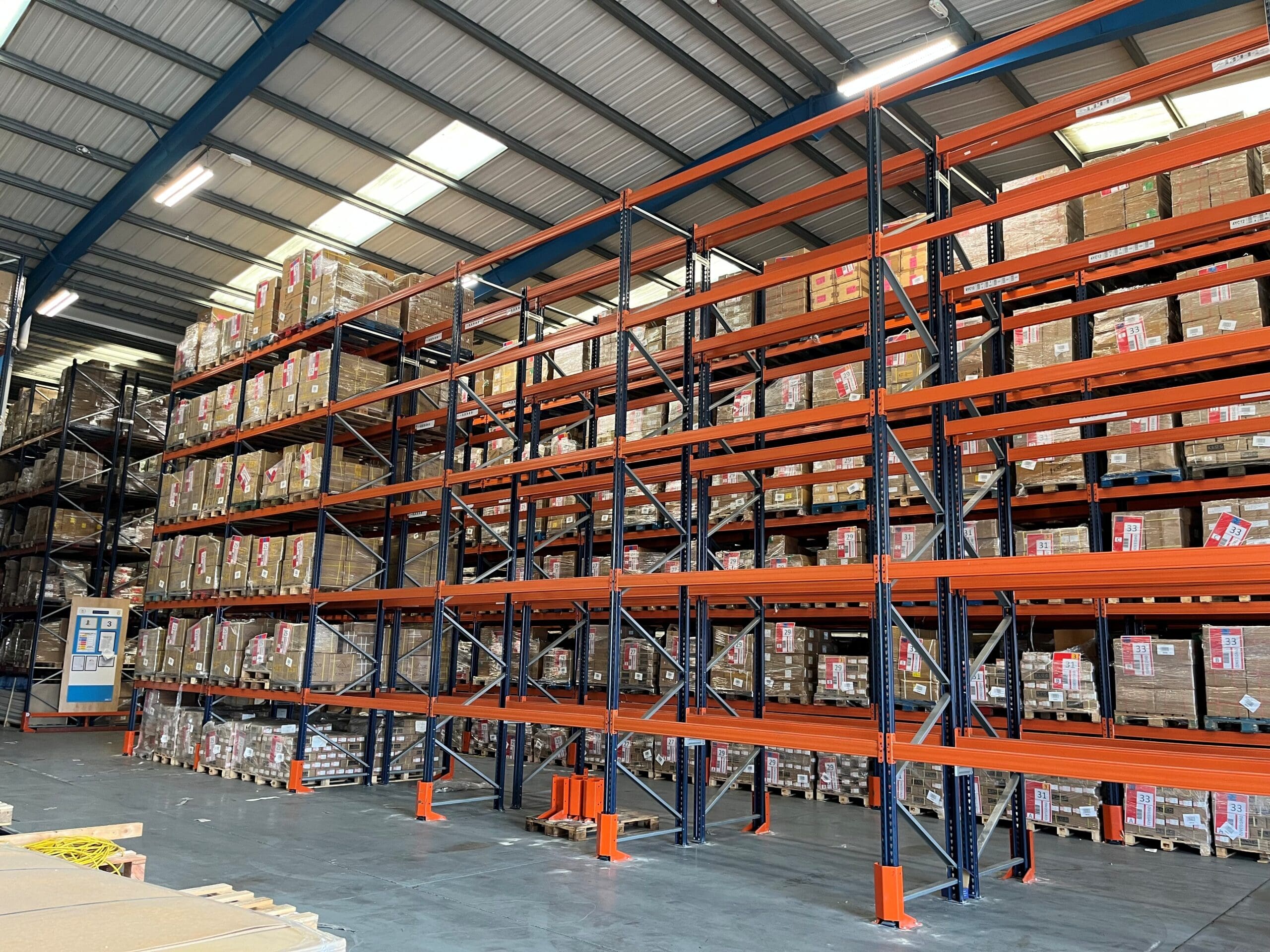
    Pallet racking forms the backbone of many eCommerce warehouses. It allows businesses to store large volumes efficiently while keeping palletised stock organised.


    Our pallet racking systems are designed for consistent performance in busy warehouse environments. Adjustable beam levels allow businesses to adapt storage areas as stock profiles change.


    Bulk inventory can be stored higher up, freeing lower levels for fast moving products and picking operations.


    Pallet racking also supports clear stock zoning, which improves inventory management and replenishment efficiency.


    For warehouses dealing with seasonal demand spikes, this flexibility becomes especially valuable.


    Longspan racking for picking and packing areas


    Fast picking is critical in eCommerce fulfilment. Staff need clear visibility and easy access to products.


    Longspan racking works particularly well in picking zones because it supports hand loaded items while keeping products organised and accessible.


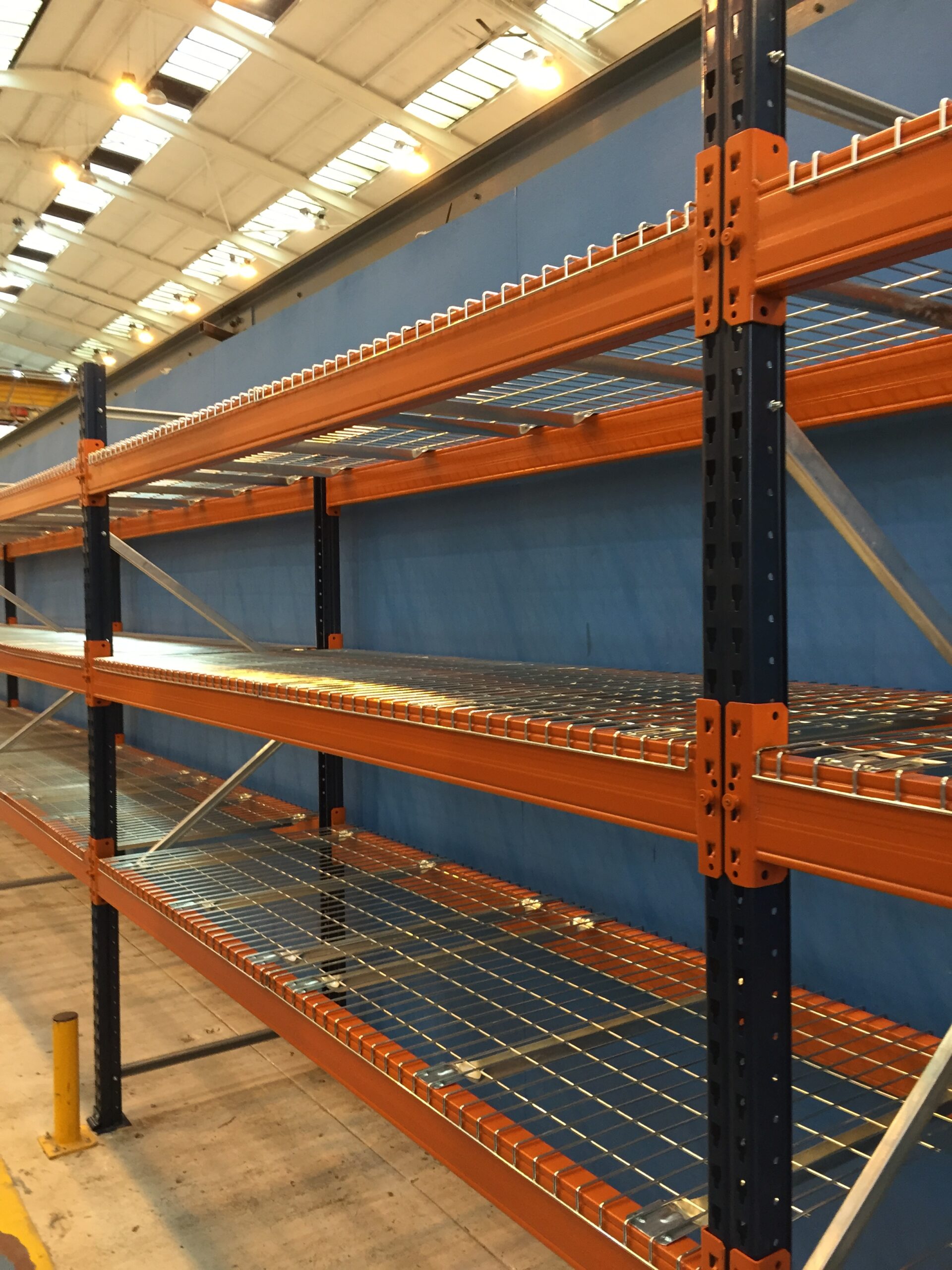
    Our longspan racking systems are commonly used for small to medium sized items, returns processing and packing stations. Wide shelf spans provide flexibility without wasting space.


    This type of storage also adapts well as product lines expand.


    In many eCommerce facilities, combining pallet racking with longspan racking creates a more efficient workflow. Bulk stock remains organised on pallets while active inventory stays close to packing operations.


    Make better use of vertical warehouse space


    One of the simplest ways to increase storage capacity is to use more of the building height.


    Many warehouses still rely on low level shelving that leaves overhead space unused. Taller racking systems increase storage density without increasing floor space.


    That matters because warehouse property costs continue to rise across the UK industrial sector.


    Before increasing storage height, businesses should assess ceiling clearance, fire safety requirements and forklift access. Proper installation and load planning remain essential.


    Improve warehouse flow, not just storage capacity


    Adding more storage alone does not solve efficiency problems.


    Poor layouts create unnecessary movement, slower picking and congestion around packing stations. The best storage solutions improve warehouse flow as much as capacity.


    Fast moving products should stay close to dispatch areas. Slower stock can be positioned in higher or less accessible locations.


    Small layout changes often reduce travel time significantly.


    Common storage mistakes in eCommerce warehouses


    Relying on unsuitable shelving


    Light duty shelving often struggles under constant warehouse use.


    Poor stock zoning


    Mixing fast and slow moving products reduces picking efficiency.


    Ignoring scalability


    Storage systems should support growth without requiring full replacement.


    Underusing vertical space


    Warehouses often run out of floor space long before they reach full storage capacity.


    FAQs


    What is the best racking system for eCommerce warehouses?

    Most eCommerce operations benefit from pallet racking for bulk storage and longspan racking for picking areas.


    How can I improve picking efficiency in my warehouse?

    Organised stock zoning, accessible shelving and clear workflows all help reduce picking times.


    Is pallet racking suitable for growing eCommerce businesses?

    Yes. Pallet racking is scalable and can be expanded as inventory levels increase.


    Contact Us


    If your eCommerce warehouse is becoming harder to manage as order volumes grow, contact our team through our contact page. We will help you create a storage system that supports faster fulfilment, safer operations and long term growth.
  • How to Maximise Warehouse Space Without Expanding Your Premises

    How to Maximise Warehouse Space Without Expanding Your Premises

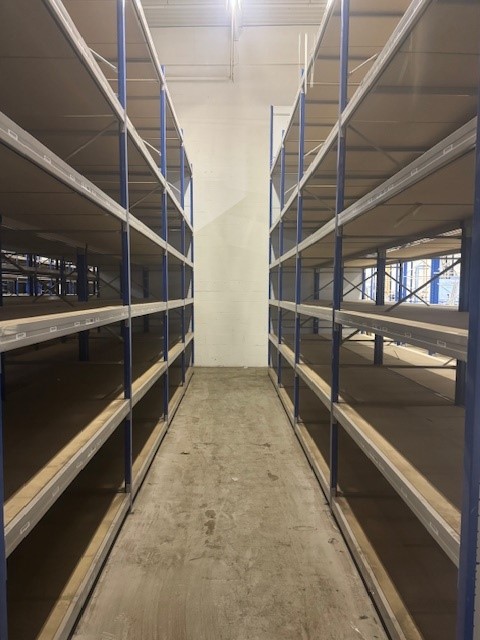
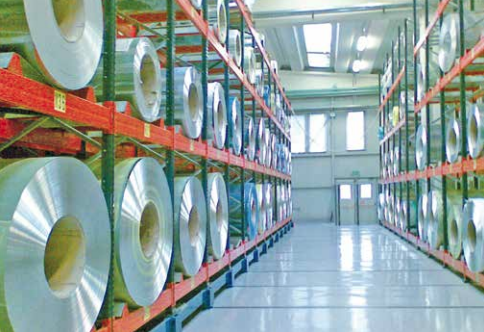
    Expanding into larger premises is expensive, disruptive and often unnecessary. In many warehouses, unused vertical space, poor layouts and outdated storage systems limit capacity long before the building reaches its true potential. The right combination of industrial shelving, pallet racking and longspan racking can increase storage space, improve workflow and reduce operational pressure without the cost of relocation.


    For most businesses, the quickest gains come from using space more efficiently rather than adding more of it.


    Why warehouse space becomes inefficient


    Warehouses tend to evolve over time. New product lines arrive, stock levels increase and layouts change to solve short term problems. Eventually, aisles become cramped, picking slows down and storage areas lose structure.


    According to a report from Savills, demand for UK warehouse space continues to rise due to eCommerce growth and supply chain pressure. At the same time, industrial property costs remain high. Making better use of existing space has become a priority for many operations managers.


    The good news is that most warehouses have untapped capacity.


    Use vertical storage more effectively


    One of the most common issues we see is underused height.


    Many warehouses only use a fraction of their vertical space. Installing taller industrial shelving allows businesses to increase storage capacity without increasing floor usage.


    Our industrial shelving systems are designed to support organised storage in busy environments. Adjustable shelf levels also make it easier to adapt storage areas as stock profiles change.


    Before increasing height, it is important to review ceiling clearance, lighting and access equipment. Safety should always guide the design.


    Install pallet racking for bulk storage


    Pallet racking remains one of the most effective ways to maximise warehouse space.


    A properly planned pallet racking layout creates clear storage zones while making better use of vertical capacity. It also improves accessibility and stock rotation.


    Our pallet racking systems support a wide range of warehouse operations, from manufacturing to distribution. Beam levels can be configured to match pallet dimensions and load requirements.


    Narrower aisle configurations can increase storage density further, although this must be balanced against forklift access and workflow efficiency.


    Improve picking areas with longspan racking


    Not every product belongs on pallets. Hand picked items often create clutter when they are stored inefficiently.


    Longspan racking works well for mixed inventory, boxed products and picking locations. It offers wide shelf spans with easy access, making it ideal for fast moving stock.


    Our longspan racking systems are commonly used to organise picking areas and back stock. They help reduce handling time while keeping stock visible and accessible.


    For many warehouses, combining pallet racking with longspan storage creates a more efficient overall layout.


    Reduce wasted aisle space


    Aisles that are too wide waste valuable floor area. Aisles that are too narrow slow movement and increase accident risk.


    Warehouse layouts should match the handling equipment in use. Counterbalance forklifts require more turning space than reach trucks, for example.


    Small layout adjustments often free up more capacity than expected. Repositioning storage zones or consolidating slow moving stock can create additional room without major disruption.


    Review stock organisation regularly


    Storage systems work best when paired with good organisation.


    Old or obsolete stock should not occupy prime storage locations. Fast moving items should remain easy to access, while slower lines can be stored higher or further back.


    Cycle counts and regular stock reviews help identify wasted space early.


    The Health and Safety Executive also recommends keeping warehouse layouts clear and organised to reduce handling risks and improve safety standards. More guidance is available at hse.gov.uk.


    Common mistakes that reduce warehouse capacity


    Ignoring vertical height


    Many facilities expand outward before using the full height available.


    Using the wrong storage system


    Shelving designed for light loads will not perform well in heavy duty environments.


    Poor layout planning


    Random storage layouts reduce efficiency and create unnecessary movement.


    Delaying upgrades


    Damaged or outdated systems often waste more space than businesses realise.


    FAQs


    What is the best way to maximise warehouse space?


    Using vertical storage more effectively and improving layout efficiency usually delivers the biggest gains.


    Does pallet racking increase storage capacity?


    Yes. Pallet racking allows businesses to use vertical space safely while improving stock organisation.


    Can industrial shelving work in large warehouses?


    Absolutely. Industrial shelving is ideal for hand picked items, small parts and organised stock zones.


    Contact Us


    If your warehouse is starting to feel overcrowded, contact our team through our contact page. We will help you identify practical ways to increase storage space without the cost and disruption of moving premises.

  • What Are The Best Storage Solutions For Retail Stockrooms?

    What Are The Best Storage Solutions For Retail Stockrooms?

    The best storage solutions for retail stockrooms are those that maximise space, improve access to stock and support fast replenishment. In most retail environments, longspan shelving provides flexible and accessible storage for boxed or loose items, while longspan racking supports heavier loads and bulk stock. Smaller backrooms may also benefit from compact systems such as garage shelving. The right combination improves organisation, reduces handling time and keeps stockrooms safe and efficient.

    Retail stockrooms often face pressure on space. Layouts need to work hard, not just hold stock.

    Why storage matters in retail stockrooms

    A well organised stockroom keeps the shop floor running smoothly. Staff can locate products quickly, replenish shelves faster and reduce time spent searching for items.

    Poor storage leads to misplaced stock, delays and lost sales. According to the British Retail Consortium, efficient stock handling plays a key role in maintaining availability and reducing shrinkage across retail operations.

    Storage systems should support clear organisation, safe handling and consistent access.

    Longspan shelving for flexible retail storage

    Longspan shelving is one of the most effective solutions for retail stockrooms. It is designed for hand loaded goods and offers wide bays with adjustable shelf levels.

    Our longspan shelving systems are ideal for storing clothing, boxed goods, small appliances and general retail stock. Shelves can be adjusted as product lines change, which makes the system easy to adapt.

    This type of shelving keeps items visible and accessible. Staff can pick stock quickly without needing specialist equipment.

    Longspan racking for heavier stock

    For retail businesses that handle bulk deliveries or heavier items, longspan racking provides additional strength and capacity.

    Our longspan racking systems are suited to backroom storage where larger quantities need to be held safely. They support higher load capacities while maintaining accessibility.

    This is particularly useful for retailers with high turnover products or seasonal stock increases.

    Garage shelving for compact stockrooms

    In smaller retail spaces, storage needs to be practical and space efficient. Garage shelving offers a simple solution for lighter loads and tight areas.

    Our garage shelving systems are often used in smaller backrooms, kiosks or independent shops. They provide organised storage without taking up excessive space.

    This approach works well when combined with larger systems elsewhere in the stockroom.

    How to choose the right storage solution

    Stock type and volume

    Start by reviewing the type of stock you hold. Lightweight items such as clothing or accessories work well on longspan shelving. Heavier or bulk goods may require longspan racking.

    Volume also matters. High stock levels need systems that make use of vertical space.

    Access and workflow

    Retail stockrooms rely on quick access. Systems should allow staff to locate and retrieve items without delay.

    A clear layout reduces congestion and improves efficiency during busy periods.

    Available space

    Many stockrooms have limited floor space. Taller shelving systems help increase capacity without expanding the footprint.

    At the same time, aisle space must be maintained for safe movement.

    Safety and compliance

    Storage systems must be installed correctly and used within their load limits. Overloading or poor installation increases risk.

    Guidance from the Health and Safety Executive highlights the importance of safe storage practices in reducing workplace incidents. This can be reviewed at hse.gov.uk.

    Common mistakes in retail stockroom storage

    Overcrowding shelves
    Packing too much onto each level reduces visibility and makes stock harder to manage.

    Poor organisation
    Without a clear system, items become difficult to locate, slowing down operations.

    Ignoring future growth
    Storage systems should allow for expansion. A flexible setup avoids the need for frequent changes.

    FAQs

    What is the best shelving for a retail stockroom?

    Longspan shelving is often the best choice due to its flexibility, strength and ease of access.

    Can longspan racking be used in retail environments?

    Yes, it is suitable for heavier stock and bulk storage in backroom areas.

    How can I maximise space in a small stockroom?


    Use vertical space with taller shelving and keep layouts simple to maintain access.

    Speak to our team about tailored shelving solutions

    If you are looking to improve your retail stockroom, contact our team through our contact page. We will help you design a storage solution that keeps your stock organised, accessible and ready to move.

  • What Are The Best Racking Solutions For Warehouses?

    What Are The Best Racking Solutions For Warehouses?

    The best racking solutions for warehouses depend on the type of stock you store, how frequently it moves and how much space you have available. In most UK warehouses, pallet racking provides the most efficient solution for bulk storage, while longspan racking works well for hand loaded goods. A well planned system improves safety, increases capacity and supports smoother day to day operations.

    Choosing the right racking is not about picking a single system. It is about selecting a combination that suits your workflow, stock profile and future growth.

    Why choosing the right racking system matters

    Racking is more than storage. It directly affects how your warehouse operates.

    A well designed system allows quicker picking, clearer organisation and safer handling. Poorly chosen racking can lead to wasted space, bottlenecks and higher risk of damage.

    According to the Health and Safety Executive, unsafe storage systems contribute to a significant number of workplace incidents each year. Proper design, installation and load management are essential for compliance and safety.

    Types of warehouse racking systems

    Pallet racking for bulk storage

    Pallet racking remains the most widely used system in UK warehouses. It is designed to store palletised goods efficiently while allowing direct access to each load.

    Our pallet racking systems are suitable for a wide range of industries, including logistics, manufacturing and retail distribution. They can be configured to suit different aisle widths and handling equipment.

    This type of racking works best when you need to store large volumes of stock with consistent pallet sizes. It also supports high bay storage, which helps maximise vertical space.

    Longspan racking for hand loaded items

    Longspan racking is designed for items that are too large or irregular for standard shelving but do not require pallet storage.

    Our longspan racking systems are commonly used for picking areas, spare parts storage and mixed inventory. They allow easy access and can be adjusted to suit different load sizes.

    For warehouses that combine pallet storage with manual picking, longspan racking often complements pallet racking well.

    Specialist racking systems

    Some warehouses require more tailored solutions. These may include drive in racking for high density storage, cantilever racking for long or bulky items and mezzanine systems to create additional floor space.

    Each option comes with its own benefits and limitations. The right choice depends on stock rotation, handling methods and available space.

    How to choose the best racking solution

    Stock type and handling

    Start by assessing what you store. Palletised goods are best suited to pallet racking, while loose or varied items often require longspan systems.

    Handling equipment also matters. Forklift access, aisle width and turning space all influence layout.

    Available space

    Warehouse height is often underused. Taller racking systems increase capacity without expanding your footprint.

    Floor condition should also be considered. Racking must be securely fixed to a suitable surface to maintain stability.

    Throughput and access

    Fast moving environments benefit from systems that allow direct access to stock. Slower moving goods can be stored in higher density configurations.

    The balance between accessibility and storage density is key.

    Scalability

    Your racking system should support future growth. Modular designs allow you to expand without replacing the entire system.

    At UK Shelving, we design systems that can adapt as your business develops.

    Common mistakes to avoid

    Overloading racking
    Each system has defined load limits. Exceeding them risks structural failure and safety issues.

    Poor layout planning
    Inefficient layouts reduce productivity and increase handling time.

    Ignoring inspections
    Regular checks help identify damage early. This prevents small issues from becoming serious problems.

    The Storage Equipment Manufacturers Association provides guidance on inspection and maintenance standards, which can be reviewed at sema.org.uk.

    FAQs

    What is the most common warehouse racking system?


    Pallet racking is the most common due to its flexibility and ability to store large volumes efficiently.

    Is longspan racking suitable for heavy items?


    It can support significant weight, but it is typically used for manually handled goods rather than heavy pallets.

    How do I know which racking system is right for my warehouse?


    It depends on your stock type, handling methods and available space. A professional assessment ensures the system is correctly specified.


    Explore our full range of racking solutions

    If you are planning a new warehouse layout or upgrading your current setup, contact our team today through our contact page. We will help you choose a racking solution that is safe, efficient and built to last.

  • How Much Does It Cost to Install Pallet Racking?

    How Much Does It Cost to Install Pallet Racking?

    How Much Does It Cost to Install Pallet Racking?

    If you are planning a warehouse fit out or expanding your storage capacity, one of the first questions you will ask is how much does it cost to install pallet racking. The answer depends on several factors, including system size, layout complexity and installation requirements.

    There is no fixed price for installation. Costs vary based on the scale of the project and the condition of your premises. However, understanding the key pricing elements will help you plan your budget with confidence.

    What influences the cost of pallet racking installation?

    When calculating how much does it cost to install pallet racking, we look at more than just the number of bays. Installation is a structured process that must meet safety and compliance standards.

    Project size and layout

    Larger installations usually offer better value per bay, as labour can be allocated efficiently across the site. Smaller jobs may have a higher cost per section due to minimum labour requirements.

    System height and configuration

    High bay systems or narrow aisle layouts require additional care during installation. Access equipment such as scissor lifts or specialist handling equipment may be required, which affects cost.

    Site preparation

    The condition of the warehouse floor plays a role. Floors must be level and suitable for anchoring. If remedial work is required before installation, this will add to the overall project cost.

    Access and working conditions

    Restricted access, phased installations or out of hours work can influence labour pricing. Clear access to the installation area keeps costs controlled.

    Compliance and safety requirements

    All pallet racking must be installed in line with manufacturer specifications and industry guidance. This ensures structural integrity and safe load performance.

    Typical installation cost ranges

    While every project is different, installation costs are commonly calculated per bay or per tonne of steel erected.

    For straightforward ground level adjustable pallet racking systems, installation can start from a few hundred pounds for small runs. Larger warehouse projects may run into several thousand pounds, depending on scale and complexity.

    It is important to separate product cost from installation cost. When asking how much does it cost to install pallet racking, you are paying for skilled labour, proper anchoring, beam levelling and system alignment. These steps protect your investment and reduce long term risk.

    Why professional installation matters

    Attempting to reduce costs by using unqualified labour can create serious safety concerns. Incorrectly installed uprights or poorly secured beams may compromise the entire structure.

    Professional pallet racking installation ensures the system performs as designed. Uprights are correctly spaced, beams are set level, and all fixings are secured to specification.

    Industry guidance from organisations such as the Storage Equipment Manufacturers Association outlines best practice for safe installation and inspection. Following these standards protects your staff and your stock.

    At UK Shelving, we manage projects from initial layout planning through to final installation. Our pallet racking solutions are supplied with full installation support to ensure the system is assembled correctly and efficiently.

    Additional cost considerations

    There are other elements to consider when reviewing how much does it cost to install pallet racking.

    Load signage and safety accessories

    Load notices must be displayed clearly. Safety barriers, rack protection and end of aisle guards may be required depending on traffic levels.

    Future expansion planning

    Designing the system with future growth in mind can reduce long term costs. Adjustability and modular layouts allow expansion without full replacement.

    Ongoing inspections

    Regular inspections help maintain compliance and extend system lifespan. Budgeting for routine checks supports safe operation.

    For businesses requiring tailored layouts or specialist configurations, our bespoke services include full design and installation support.

    Getting an accurate quotation

    The only reliable way to determine how much does it cost to install pallet racking for your site is through a detailed assessment. We review warehouse dimensions, pallet weights, access routes and operational needs before preparing a quotation.

    Clear planning at the outset prevents unexpected costs later. It also ensures your racking system delivers maximum efficiency from day one.

    If you are considering installing pallet racking in your warehouse, speak to our team through our contact page. We will be happy to provide clear advice and a tailored quotation to suit your requirements.

  • How Much Weight Can Pallet Racking Hold?

    How Much Weight Can Pallet Racking Hold?

    One of the most common questions we are asked is how much weight can pallet racking hold. It is a critical consideration for any warehouse, distribution centre or industrial unit. Load capacity affects safety, compliance and long term performance.

    The short answer is that it depends on the system design. The weight capacity of pallet racking varies according to beam length, upright strength, bay configuration and the way loads are distributed. A correctly specified system can support several tonnes per bay, but it must be designed around your specific stock and layout.

    Understanding load capacity in pallet racking

    When clients ask how much weight can pallet racking hold, they are usually referring to beam capacity or bay capacity. Both are important.

    Beam capacity relates to the maximum weight a pair of beams can safely support. This is typically measured as a uniformly distributed load. In many standard warehouse setups, a single beam level can hold between 1000 kg and 3000 kg, depending on beam section and span length.

    Bay capacity refers to the total safe load that the entire frame structure can carry. This includes all beam levels within that bay. The overall capacity must account for cumulative weight and structural limits.

    If you are installing new pallet racking, the system should always be specified by load requirement first. Guesswork creates risk.

    Key factors that determine how much weight a pallet rack can hold

    Several factors influence how much weight can a pallet rack hold in real world use.

    Beam length and profile

    Longer beams carry more deflection and generally have lower load ratings. Heavier duty beam profiles increase capacity but must be matched with suitable uprights.

    Upright height and thickness

    Taller frames require stronger uprights. The steel gauge and bracing pattern directly affect stability and load tolerance.

    Load distribution

    Pallets must sit correctly on beams. Loads should be evenly distributed across the beam pair. Point loading can reduce safe capacity significantly.

    Floor condition and fixings

    Pallet racking must be secured to a suitable concrete floor. The slab strength and anchor fixings form part of the overall structural integrity.

    Configuration and layout

    Double deep systems, narrow aisle layouts and high bay installations introduce additional design considerations.

    We always recommend that pallet racking is designed in accordance with recognised standards such as the Storage Equipment Manufacturers Association guidance. This ensures structural calculations are accurate and compliant.

    Typical weight capacities in UK warehouses

    In standard adjustable pallet racking systems, a common configuration might include three beam levels, each rated at 2000 kg. This would provide a bay capacity of 6000 kg, assuming the uprights are rated accordingly.

    However, high density or heavy duty installations can exceed this significantly. Some systems are engineered to carry 8000 kg or more per bay. Every project must be assessed individually.

    If you are exploring new racking for your warehouse, our pallet racking systems are designed to meet a wide range of industrial requirements. We also supply a broader range of racking solutions for different storage environments.

    Why safe load limits matter

    Understanding how much weight can pallet racking hold is not simply about maximising storage. It is about protecting people, stock and premises.

    Overloading is one of the most common causes of racking failure. Even small exceedances, repeated over time, can cause beam deflection or upright distortion. Damage may not be obvious until it becomes serious.

    The Health and Safety Executive provides guidance on safe warehouse operations, which can be reviewed at hse.gov.uk. Clear load signage and regular inspections are essential.

    Each installation should display load notices showing maximum bay and beam capacities. These figures must match the original design calculations.

    How to ensure your pallet racking is correctly rated

    If you are unsure how much weight can a pallet rack hold in your facility, the safest step is to review the original specification. Load notices, engineering drawings and manufacturer documentation should confirm capacities.

    If documentation is missing, a professional inspection should be carried out before increasing loads. Modifications such as adding extra beam levels or increasing pallet weight require reassessment.

    At UK Shelving, we help businesses specify, supply and configure pallet racking that matches their operational needs. We assess stock type, pallet weight, handling methods and future growth plans before recommending a system.

    The right answer to how much weight can pallet racking hold depends entirely on your application. When properly designed and installed, pallet racking provides safe, reliable and high capacity storage for demanding environments.

    If you would like advice on selecting the right system for your warehouse, please get in touch with our team through our contact page. We will be happy to help you plan a safe and efficient solution.

  • How Can The Right Shelving Keep Your Stockroom Safe?

    How Can The Right Shelving Keep Your Stockroom Safe?

    The fast paced world of logistics and the supply chain relies on using the right heavy duty stockroom shelving in the right way in order to avoid potential safety risks and hazards.

    Ever since the rise of the narrow aisle forklift truck in the 1960s by companies such as Lansing Bagnall, warehouses have become exceptionally efficient but require careful planning and training to minimise potential risks.

    This has been magnified by just-in-time logistics, which has increased the speed of operations and thus the need for perfect organisation.

    Here is how the right choices of shelving and racking help to keep warehouse workers safe.

    Choosing Shelves To Match Inventory Categories

    Whilst organising items by category is important for efficiency reasons, they also have the benefit of ensuring that the shelving solutions chosen are capable of controlling, spreading and handling the potential weight being placed on them.

    This reduces the risk of overstacking and the potential for collapse that can emerge as a consequence. It also makes items easier to find, which allows for more predictable forklift operations.

    Clearly Displaying Weight Limits

    The more clearly signposted safety protocols are, the more likely they are to be seen and followed. Weight limits are a bare minimum requirement in this regard.

    Because of this, every shelving or pallet rack should have a consistent signage scheme to show the overall weight limits of a shelving unit, which alongside clear weight designations on inventory allow warehouse operatives to avoid overloading a shelf and causing potential damage.

    Colour-Coded Warehouse Sections

    Different shelving systems can be bought in different colours or with colour-coded sections to emphasise that they are designed for different types of inventory.

    The easier it is to navigate a warehouse, the less potential there is for safety and security hazards, and colour coding allows forklift operators to see at a glance where the products they need to pick, load or unload are likely to be.

    Avoid Dangerous Overhangs

    Whilst not every type of product can be stored on convenient standardised pallets, choosing the right types of shelving allows a warehouse to avoid the potential dangers that come from unsuitable and unsafe storage and racking decisions.

    Using wrapping or netting can also help in these cases where storing long or oversized items is unavoidable.

    Enables Even Weight Distribution

    The right type of shelving encourages sensible storage habits such as storing inventory in a way that evenly spreads the load across the shelf to avoid generating fatigue points.

    Having the right system in place using the right equipment is highly effective at encouraging all warehouse users to maintain high standards of safety and organisation.

    Install Racking Designed Around Loading And Unloading Protocols

    Inventory categories have different loading and unloading protocols depending on the items in question, and the shelving and racking designs should be built around how they are going to move from one storage area to the next.

    For example, handling perishable items such as food typically requires a first in, first out (FIFO) inventory management method to ensure that the items likely to expire first are also processed and sold first.

    By contrast, other long-term storage can utilise alternatives such as last in, first out, as the potential for unsellable stock is less critical.

  • When Is Longspan Shelving The Best Storage Option?

    When Is Longspan Shelving The Best Storage Option?

    All over the UK, more warehouses have popped up in recent years, partly as a result of the rise of e-commerce and the need for more distribution centres. But how the goods are stored is an important matter, both as a means of maximising capacity and ensuring they are kept in the safest and most secure manner without sustaining damage.

    A key question when it comes to choosing shelving is when you would use pallet racks and when you might opt for longspan shelving. The correct choice will depend on the items being stored, their size and their weight.

    Longspan shelving, when you can use it, has the benefits of being neat, orderly, making efficient use of space and enabling you to access the items on the shelves quickly, which is very handy for swift distribution.

    In many respects, it operates as a smaller-scale version of a pallet racking system, often storing heavy goods but having the convenience of being able to accommodate all sorts of items, including fragile items, meaning you can access what you need, when you need it.

    However, the size and shape of some goods mean that in some cases, longspan shelving is not the ideal option and it works better to use real pallet racking systems instead. To understand this, it is important to consider the different kinds of pallet racking systems that exist.

    All pallet systems offer advantages in terms of maximising space, organising the storage of different items and high levels of safety. However, individual kinds have different pros and cons.

    For instance, selective pallet racking is the best for ease of access to stored items, but less efficient than others for use of space. Double deep pallet racking makes better use of space, but trades this off against a reduced ease of access.

    Some pallet racking is suited to specific kinds of items. A cantilever pallet rack is ideal for long items like pipes and boards, but needs careful balancing and is not suitable for general pallet use.

    For flexibility, adjustable pallet racking is very useful for handling different goods of varied sizes and weights, but requires a lot of maintenance and plenty of organisation to avoid being inefficient with space usage.

    These are just some of the types of pallet racking, each of which have their pros and cons and in some cases are only particularly useful for certain kinds of goods.

    By contrast, longspan shelving offers a similar form of storage with the same broad purpose of storing various items with the best use of space in mind, but on a smaller scale to take into account the different needs of some warehouses and the kinds of items that are kept there.

    Choosing the right shelving for your warehouse is not always straightforward and it may be that different sections will benefit from different solutions. By examining carefully what your options are and what best suits the items you will stock, it becomes easier to work out if Longspan shelving is the best option for your warehouse.

  • How Much Space Do You Need Between Pallet Racking Units?

    How Much Space Do You Need Between Pallet Racking Units?

    The evolution of warehouses from rudimentary storehouses into efficient fulfilment and inventory management centres has been dictated by the capabilities of forklifts, pallets and the rack shelving needed to store goods in bulk.

    Thanks to the development of narrow-aisle forklifts in the 1950s, warehouses could fit more inventory per square metre of space, whilst stronger racking systems ensured that said narrow shelves could be stacked higher than ever before.

    This was important in the 1950s in the early era of the modern supply chain but has become even more critical now with so many industries requiring that huge varieties of goods be stored and managed quickly.

    However, every warehouse will have a limit for how efficiently they can store inventory before they reach a tipping point where both efficiency and safety are reduced significantly.

    This means that there needs to be enough space for safe operation but not too much to waste precious space that could be helping a business to make money.

    Here are some of the considerations to make when it comes to space between shelving units.

    Forklift Operating Circle

    The width of the aisles needs to be big enough not only for forklifts to travel down them but also for them to safely turn, lift and be able to pick up pallets without increasing the risk of accidents.

    The exact operating distances will be found in the technical specifications for your fleet, but the important rules to note are that the aisle width must be larger than the operating circle for your largest forklift, and the figures quoted are absolute minimums, with extra space recommended if possible.

    A general rule of thumb when it comes to aisle space is to leave between 11 and 15 feet between each rack although this can vary depending on the type of equipment your warehouse uses.

    Proximity To Warehouse Walls

    Unlike retail shelving, which tends to be placed close to or is affixed to the walls of a shop in order to increase space, racking must be a clear distance from the walls, racking beams and upright end frames.

    The main reason for this is to avoid potentially dangerous collapses caused by seismic activity. Warehouses typically rely on a lot of heavy machinery which causes vibrations in the building, which can shake any nearby racking shelves.

    These vibrations can also be caused by sudden impacts or by earthquakes.

    Because of this, it is advised that racking should be more than two per cent of its height away from the wall in the cross-aisle direction, whilst it should also be more than five per cent away in the down-aisle direction.

    Beyond simple safety, having a clear distance from the walls can help make the warehouse easier to clean, make it easier for maintenance teams to have safe access as and when required, and allow for sufficient airflow to avoid damage to products, racking or the building itself.

    Whilst there are several general rules and standards that have been employed, ultimately the space between racking units and between the walls of the warehouse will depend considerably on the business and its individual risks and needs.

  • Why Are There So Many Different Pallet Storage Standards?

    Why Are There So Many Different Pallet Storage Standards?

    The modern business world and the fast-moving supply chains that keep it functioning were built thanks to three inventions, each of which provided a more uniform way to manage the transport of goods.

    At its core, just-in-time supply management with constantly moving warehouse pallet storage racks is made possible thanks to the shipping container, the forklift truck and the pallet, which enabled standardised shipping units to be moved around the world in a relatively uniform manner.

    Without the pallet, in particular, the supply chain relies on bulk break cargo movement, which can for many types of product be relatively slow and unreliable.

    However, whilst most warehouse forklifts are designed in a similar way to meet the needs of narrow rack storage, and shipping containers are the same width, often the same height and designed to have the same tolerances, pallets are far more variable. 

    There are no fewer than six pallet designs and dimensions described in ISO 6780:2003, the International Office for Standardisation’s official set of recognised standards. This does not even include the many different regional variations of pallet sizes.

    The reason why this is the case is that the pallet has been a vital part of goods transportation since before the era of containerisation, and the rest of the business world shaped itself around particular pallet sizes.

    Form Follows Function

    In order for pallets to be useful for business and save time, energy and workloads, they need to be designed with multiple purposes in mind.

    They need to be accessible to pallet jacks and forklifts so they can be easily moved around warehouses (which also makes them work in compatible automated warehouses). 

    They also need to stack and fit in racking units in a way which allows for maximum accessibility whilst minimising waste in shipping containers. Finally, they also need to easily fit through buildings with standard-sized doors.

    The problem is that there is a lot of variance in these standards within different regional areas and industries, and so most pallet standards tend to find compromises for these different purposes.

    For example, the North American Grocery Manufacturers Association standard (GMA), is designed with shipping containers in mind, and 20 pallets can fit in a 40ft ISO container with just 3.7 per cent of wasted floor space. 

    That is a remarkable level of efficiency when it comes to the supply chain, but it does require warehouses to be built around its particular standards and slows down shipping and warehouse management in systems not built around it.

    The Eur-pallet, for example, is designed to fit through standard doorways, with warehouses, forklifts, lorries and warehouses optimised for the standard. This makes it a lot faster to load and over the course of an entire supply chain, this can lead to quantifiable benefits.

    Finally, the Australian standard, only typically used in Oceania, was designed for the slightly larger dimensions of the RACE container and predates the ISO standard containers. It also is completely square which means there is less filler material required to fill the pallet.