
Category: Blog

  • When Shelves Transformed Retail Establishments Forever

    Without commercial shelving, modern retail is simply impossible.

    Heavy duty, large and versatile shelves allow for a huge variety of products to be displayed at one time, and with a growing number of physical retail stores, supermarkets and fulfilment centres relying increasingly on the long tail to compete with online retail, shelving capacity is needed now more than ever.

    Whilst both retail establishments and shelving are ancient and shops have always needed shelves and cabinets in one way or another, there was definitely a turning point in history when the evolution of shelving allowed for one of the biggest revolutions in retail history to occur.

    Shelves And The Rise Of Self-Service

    It can be strange to think about, given how ubiquitous supermarkets and other modern retail stores are, but the concept of the self-service shop is surprisingly recent, relative to the history of the shop itself which is so old it predates currency itself.

    Typically these took the form of either open markets, where the furniture of choice would have been the trade table or permanent premises for skilled artisans, two concepts that exist to this day and would dominate retail for several thousand years.

    In both cases, customers would ask for items from a seller, whether it is directly from an artisan, a tradesperson or via a merchant or peddler in the markets.

    Even with the rise of shopping arcades such as The Rows in Chester and thus the capacity to sell items on shelves, these shelves were primarily used for storage and organisation for the benefit of the shopkeeper and any staff working inside it.

    Customers would wait outside the shop and be served through a hatch or a window, meaning that until they actually paid their money and received whatever they happened to have ordered from the shop.

    This only finally started to change in the 18th and 19th centuries with the rise of an entirely new type of shopping experience, one that was predicated on the very shelves that had been hidden away from view in older, danker shops.

    The Department Store concept as we know it today evolved very slowly, and exactly what counts as the first store with this concept is up for debate. However, by most modern standards, the first department store would have been Harding, Howell & Co in Pall Mall in 1796.

    The Grand Fashionable Magazine, as it was also known, featured four big departments, and was one of the first shops to have a self-service element to it, a concept only made possible through shelving and hanging arrangements that made move products visible and available to order directly.

    Whilst not the first shop to ever be self-service, department stores would transform the retail experience by making it more involved, thus turning shopping from a necessary conversation with stockists into a leisure activity in itself.

    This concept would reach its zenith in 1909 with the launch of Selfridges in London, which made accessibility to customers its main priority and pioneered the idea of event retail, something that retailers have increasingly relied on to combat e-commerce.

    Shelving made this possible, and as the needs of customers and retailers have shifted dramatically, the layout of stores will continue to evolve as the 2020s progress.
  • Why Timber Plans May Require More Warehouse Space

    Why Timber Plans May Require More Warehouse Space

    The UK construction industry faces several significant challenges, from the high cost issues that have held back major projects like HS2 to the housing shortage. But whatever is being built, there are also some significant environmental challenges to face.

    Some of that concerns the materials used in construction and while the industry has been making much headway in developing new forms of concrete mix with much less embedded carbon, the most obvious route to sustainability in construction materials is the use of wood.

    This has been acknowledged by the government, which has just published a Timber in Construction Roadmap. The ministerial statement by Rebecca Pow MP noted that a quarter of UK greenhouse gas emissions come from the built environment. She added: “Reducing these emissions is a priority for government, in order to deliver our carbon budgets and net zero target.” 

    Ms Pow went on to state that archaeological evidence has shown that the use of timber in construction in the UK dates back to Neolithic times and there are still many great historical examples of its use, not least in Parliament, where Westminster Hall has the largest medieval timber roof in Europe.

    The strategy is not just about using more timber in construction, of course, as that could involve importing it in large quantities.

    Instead, the plan also envisages greatly increasing planting across the UK so that there is a more extensive and economically viable forestry industry, providing a domestic source of the material.

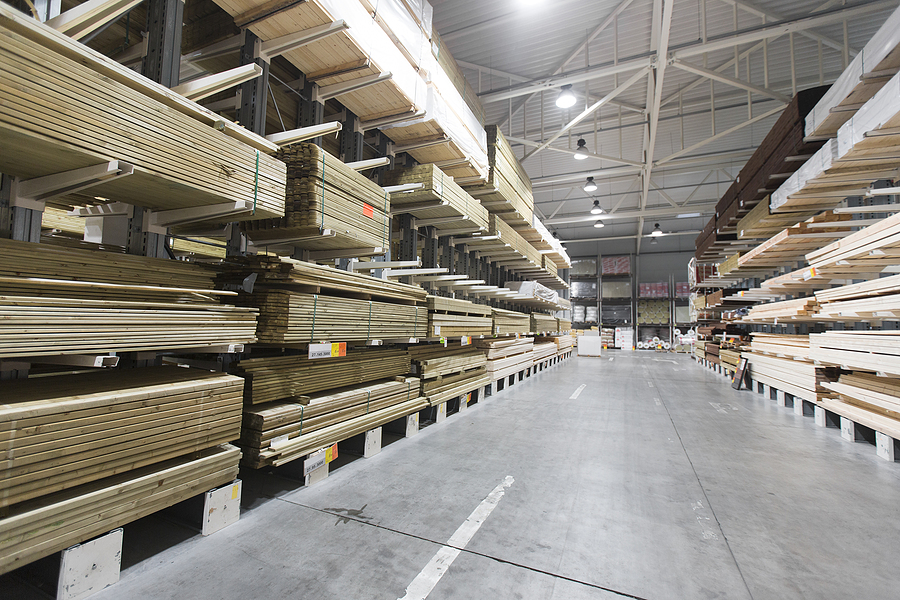
    However, while using wood may be very laudable for all these reasons, the construction sector may need to adjust significantly. In particular, the porous nature of the material means that once it has been stripped of its bark, it needs to be kept dry.

    That will require more warehouse storage space in the construction products sector, whereas many other materials like concrete blocks, bricks and steel might not require such shelter from moisture.

    Indeed, one of the key tasks of maintaining wooden structures in buildings involves preventing moisture ingress that can cause rotting and attract wood-devouring bugs. Some wood may be coated with waterproofing to make it suitable for external use, but much of it will simply need to be kept dry so it can be used indoors in structures such as roof beams.

    There will be some limits to what can be achieved with wood, of course. In particular, at a time when British cities are building ever more and taller skyscrapers, especially in London and Manchester, the idea that wood may play any significant role in such structures is one many have taken fright of.

    As recently as 2016, when Boris Johnson was still London mayor, he was presented with a vision for a 300 ft skyscraper in the City of London’s Barbican District, conceived by Cambridge University engineers. Such a tower would have been the tallest wooden building in history and, its designers hoped, spark a revolution in sustainable construction.

    However, the Grenfell Tower disaster a year later sparked a major rethink about the use of combustible materials in tall buildings, leading to new rules that wood can only be used in buildings up to 18m (59 ft) tall. Therefore, the use of wood in UK construction may grow significantly, but only for smaller buildings.

  • How Retail Shelves Are Used To Sell More Products

    How Retail Shelves Are Used To Sell More Products

    Despite being a relatively simple concept, commercial shelving is a vital part of the retail experience for more reasons than the obvious.

    Whilst it is somewhat of a truism that the vast majority of high-volume retail establishments need shelving units on a practical basis, there is more to their use than just stacking products on them.

    In fact, many savvy stores use their shelves, in terms of size, placement and location to sell more products and generate more revenue.

    Here are some of the ways in which shelves are used strategically to take advantage of shopper psychology and sell more products.

    Eye Level Is Buy Level

    The golden rule that so many stores use, particularly greengrocers and supermarkets, is that whatever products they want to sell the most are placed at eye level to immediately catch the customer’s eye.

    This typically means that branded goods and higher profit margin items tend to be placed in the middle of an aisle, often to the right of where the customer is expected to enter on a typical shopper journey.

    However, there is more to this than just placing items around five feet, six inches off of the ground, as the shelves immediately above and below are also great vectors to capture a customer’s attention, and not just because people are often taller or shorter than the average.

    Shelves are often pointed slightly down to help certain retail items, which whilst designed to make it easier to make shelves look full, also has the side effect of making customers look down to the items below them. They will often look down to examine prices as well.

    Besides this, the main eyelines shops focus on are not just those of the shopper but of their children, so certain types of items designed to appeal to kids are put at either waist height, where a child would be sitting in a trolley, or on the lower shelves where kids might be walking around.

    This is why brighter, colourful items are placed lower down.

    Occasion-Based Placement

    Whilst most shelves are set up based on collections of associated products, one trend that has been attempted by small, and mid-sized stores in particular is placing items close together based on a particular shopping journey.

    A good example of this is supermarkets that will sell a pre-packaged meal, side dishes, and drinks all in the same place, typically going so far as to provide a discount for the group together. 

    Pairing meal kits with the additional items you need to complete them is also a common tactic, such as a fajita kit with the salsa, sauces, tortillas, vegetables and meat needed to cook it. It can be something as simple as pairing drinks with snacks.

    All of this is to take advantage of the limited time customers will spend contemplating their purchase and inducing impulse buys at every part of the journey.

    This is where the shelving above and below the primary items comes into particular prominence.

    Standouts And Association

    There is a certain visual language associated with shelving and one of the biggest of these is the use of brighter colours and larger signage next to certain items will increase sales significantly.

    This is because brighter colours such as yellow are associated with sales and special offers, but this effect can take place even if there is no actual saving. One Tesco shop managed to achieve the same effect with a warning to thieves.

  • How To Optimise Waste Management In A Warehouse

    Having a good waste management plan in a warehouse is essential to ensure everything is disposed of appropriately, leaving a clutter-free space to improve efficiency and productivity. 

    So, what are the best ways to optimise your waste management process in the light industrial sector?

    Separating waste products

    It sounds simple but having marked bins, such as ones with different coloured lids to indicate general waste, paper and card, bottles, and plastic, could make a big difference in helping to control your waste problems. 

    Place them at accessible points in the warehouse, such as by doors, so that staff can easily reach them. 

    The simpler you make the process for employees, the more likely they will adhere to the correct recycling procedures, which makes it considerably easier when all the waste is being collected, as the rubbish from each bin can go in the right truck. 

    Train employees

    It is a good idea to train employees with regards to your waste management process. Make sure they are given tips on how to handle the waste carefully, and adhere to the correct procedure.

    This will improve the efficiency of the company’s waste disposal and means there is less chance of the waste collection needing to be re-sorted.

    It is important these days to emphasise the importance of the company’s green practices, so staff are fully on board with its recycling procedures.

    Reuse where possible

    Although everyone knows the value of recycling, businesses can really help the environment by reusing materials where possible. 

    For instance, they can utilise wooden pallets again or use returnable product packaging to encourage customers to send back the materials so they can use them again. This saves on packaging costs, as well as energy expenses. 

    Make sure anything that can be reused has a designated area that staff are aware of. Good signage and regular reminders will help encourage this behaviour. 

    Though the UK does not make it a legal requirement for businesses to lower their carbon emissions and be more environmentally friendly, some are made to report their activities. 

    What’s more, as the UK nears its deadline to reduce carbon emissions by 68 per cent of 1990 levels by 2030, there might be greater pressure for companies to improve their sustainability measures, including their recycling procedures.

    Waste management equipment

    Having a good waste management procedure involves more than just buying multiple bins.

    Depending on the size of your warehouse, you might want to invest in proper equipment that can make your waste far more compact, as this will save space and enable a greater disposal of waste products.

    It can also help businesses to determine how much waste or recycled items they are producing, as this could help them to change behaviours in the workplace, whether by encouraging staff to bring in reusable items instead of disposable ones, or improve their recycling and reusing endeavours. 

  • How Heavy-Duty Bookshelves Existed Before Books

    Almost every business building and home has a need for a heavy-duty bookshelf of some kind, either as a store of fine literature, reference material, archival data or other forms of paper information.

    Even as offices go digital, that need for a paper trail has not entirely gone away, but what is equally as fascinating is that the need for a bookshelf to store, order and protect written information predates the invention of the codex book design itself.

    In fact, many of the architectural and social considerations that many people would consider to be associated with modern bookkeeping, both of the literal and financial variety, were widely discussed and even satirised long before the earliest surviving books as we know them.

    To understand why, we need to look at the origins and purpose of literature before the era of universal literacy.

    Seneca And The Lament Of The Armaria

    For as long as there have been writing methods and materials, there has been a need to store them for future generations, and the issue of storing religious text, songs, correspondence and complaints about copper quality has existed since the Babylonian city of Ur.

    One of the earliest examples of such a storage system was the armarium found in Ancient Roman buildings such as the lost Library of Alexandria.

    Initially, the armarium was a stone inlay that worked as an exceptionally heavy-duty shelf used for storing rolls and scrolls in an age before owning or writing books was especially common and the storage mediums involved were both very bulky and very heavy.

    However, wealthier Romans in the later era of the republic would eventually start to own books of their own, storing them in beautiful wood and ivory cupboards and bookcases also known as armaria.

    Whilst some of these collections would be owned by scholars and patrons of literary arts, far more of them were treated more like an ancient version of a coffee table book, with the book being far more of an ornament or a showpiece than necessarily being read.

    The literacy rate in Ancient Rome was not especially high, and so many of the wealthy owners would buy ancient books with no intention of reading them.

    This was something that raised the particular ire of Roman writer and satirist Seneca, who would in his dialogue On Peace of Mind criticise the hoarding of books with no expectation for them to be read or studied.

    He would argue that one can collect as many books as he wants as long as they are not for show, an aphorism still used today to criticise people who collect books as a display of intellect rather than as something to actually read.

    He then noted the common use of bookcases made from citrus wood and ivory, stacked up to the ceiling, filled with the works of historians and orators, even joking that a library was as important to a house as a bathroom was.

    All of this was before the development of the codex, the early form of book made using vellum sheets and primitive bookbinding, and long before the work of Johannes Gutenberg, the man who invented the modern movable type printing press.

  • Update School Buildings With Student Lockers

    Update School Buildings With Student Lockers

    There are many benefits to having school lockers, so educational establishments might consider investing in the furniture for their students. 

    Prevent back injury

    Thanks to having a huge variety of lessons, pupils have to carry a lot of books, sports apparatus and equipment. 

    Without a locker, they might end up having to carry a hockey stick, guitar, and food tech ingredients around with them all day, on top of their normal school work. 

    This could result in damage to their backs, according to the Spine and Joint Centre, which said a heavy school bag can change a child’s posture, affect joints and cause muscle strains. 

    Security 

    Having lockers also improves security, as personal possessions are locked away when they are not in use. This means students do not have to worry about their mobile phones or purses when in PE, expensive coats or sports gear during school lessons, or costly instruments at assembly time. 

    Encourage responsibility 

    They also help encourage responsibility among students, as they have to keep their belongings secured and locked away. If they get used to losing things or items being stolen, this will diminish the value of their possessions, and therefore, might be more tempted to take someone else’s in replacement. 

    Keeping their items safe teaches them the value of their stuff, so they look after it properly. 

    Tidier school 

    The school also massively benefits from fitting lockers, as it makes the whole premises much tidier. Instead of heaps of bags and coats outside the assembly hall or on the side of the football pitch, things can be locked away so everywhere looks much neater and less chaotic. 

  • The Strange Modular History Of The Barrister’s Bookshelf

    Businesses, offices, warehouses, retail establishments and homes will all find use in a heavy-duty bookshelf, whether to serve as a little living library, a reference repository or simply to act as a convenient storage space for smaller yet still heavy goods.

    Bookshelves come in all shapes and sizes, but by far the most unusual and unique example of a bookshelf type is the extensible bookshelf, often known as the “barrister’s bookcase”.

    They have built up a legacy as a bookshelf design designed to achieve a very specific task that is far less important now than it used to be but was at one point absolutely essential.

    A Library On The Move

    Legal advocates that appear before the High Court, Barristers typically need to travel in order to represent their clients in court, often requiring copies of legal documents and legal materials to travel with them throughout their legal circuits.

    They needed to be heavy-duty enough to carry a full shelf of exceptionally heavy hardback books, they needed to be small enough for two people to carry and they needed to be robust enough to protect the contents, which were at least very expensive and often confidential.

    They also, in keeping with late-Victorian and early-Edwardian tradition, needed to look particularly aesthetically pleasing once they reached their new home, office or guest room.

    The solution turned out to be a set of shelving units that were self-contained. These could be stacked on top of each other to create a free-standing bookcase, although some sets also came with a bottom unit that acted as a chest of drawers and a set of feet.

    Each shelf had a glass door that was locked in place and opened vertically in order to keep the books safe whilst on their journey. This would typically slide up and over the books to look inconspicuous when in situ.

    This meant that a barrister would not need to carefully unload a shelf and load the books into a box or carrying case, but instead could use the shelves themselves as a handy box.

    The leaded glass frontage keeps out direct sunlight, which can damage books, as well as dust and moisture which can destroy them outright, as well as providing a way to show off books without potentially risking their theft.

    The popularity of the barrister’s bookshelf quickly spread to universities, libraries and schools, which also required heavy, rare and expensive books to be carried around carefully.

    As times changed, books became cheaper and more accessible, which meant that it was not always necessary to carry the only copy of a reference material around, meaning that the barrister’s bookshelf became far less practically important, although some manufacturers still make them.

    They have since become exceptionally popular, both in concept as seen with other modular furniture, as well as the barrister’s bookshelves themselves as a symbol of how good design can solve any problem.

    This reputation has led to a revival in their interest, with both conventional and fixed “decorator” versions being sold to interior designers.

  • How The Pallet Made The Modern Supply Chain A Reality

    How The Pallet Made The Modern Supply Chain A Reality

    The modern world relies so heavily on exceptionally organised, heavy-duty logistics in order to make it possible for goods to travel rapidly throughout the supply chain from raw materials warehouse to final fulfilment centre.

    This modern supply chain system that we know and recognise today relies on three major inventions that have fundamentally shaped it.

    The first is the standardised ISO shipping container, which allowed for the efficient transport of goods in extreme weather conditions and the ability to stack huge amounts of disparate types of cargo, allowing for the gargantuan container ships that we see today.

    The second is the narrow-aisle forklift, which allowed for goods to be stacked in increasingly tall, increasingly efficient quantities in warehouses. This is what made it possible to create such huge fulfilment centres where goods could be stacked on heavy-duty shelving.

    Finally, there was the standardisation of the wooden pallet, which despite being smaller and far simpler an invention is perhaps the most important to modern business.

    The Development of The Modern Pallet

    The concept of a skid is nothing new, with some theories hypothesising that projects in Ancient Mesopotamia and Ancient Egypt were constructed with the help of skids to ensure that heavy construction materials could be moved with far less difficulty than if they were scraped along the ground.

    It quickly became clear that skids could not only move cargo impossible to shift otherwise, but they could transport otherwise loose goods with an unparalleled level of efficiency.

    A railway trade magazine in 1931 claimed that skids reduced the time to load 13,000 cases of tinned goods from three days to four hours.

    This concept has existed for a long time, but what changed everything was the development of a standardised way of storing and transporting goods, which is collectively known as containerisation and drastically lowered the price of shipping goods over considerable distances.

    Despite being named after the shipping container, it would only be possible to load the amount of goods needed to make such a system worthwhile with the help of petrol-powered forklifts (in the decades before electric forklifts became viable). 

    These could only function with a standard-sized pallet designed for a forklift to scoop up and carry securely.

    These developments coincided with the Second World War, which became the testbed for a lot of logistics developments as they were used extensively and highly successfully to store and move supplies throughout the Pacific campaigns.

    After the war, many of these wartime developments were patented, most notably the four-way pallet that could be loaded in any direction and the shape of logistics changed drastically from 1949 onwards.

    Packaging (and sometimes the goods themselves were optimised so as many of them could fit on a single standardised pallet as possible, and warehouses were structured to store as many pallets as possible in the most efficient way possible.

    Amazingly, despite these developments, there is still a greater potential for evolution, with different materials, dimensions and slightly different designs available and used in different regions, although major changes would fundamentally change how warehouses look again.

  • Why Plastic Crates And Boxes Are An Essential

    Why Plastic Crates And Boxes Are An Essential

    If you have to store large quantities of books in a warehouse, there are two things you are going to need. One is very robust heavy duty bookshelves and a means of getting them there.

    Often this can involve some quite lengthy journeys. For example, if you are moving a lot of books out of a library that is being closed ahead of a replacement being built, or the building being revamped, you might find adequate storage is not to be found anywhere in the local area.

    A good example of this was around a decade ago when Manchester Central Library underwent a major makeover. Thousands of books needed to be stored and they ended up being transported many miles down to Cheshire, where they were stored on shelves in an old salt mine near Winsford, a dry environment that protected them from decay.

    While cardboard boxes can be useful for short trips and carrying lighter items, often they are far from ideal for something heavy like books.

    The benefit of storage in a place like a salt mine or well-appointed warehouse is that it is dry and sterile, but because cardboard is porous, any moisture can not only make the boxes less robust, but also risk water and mould getting into the books and damaging them.

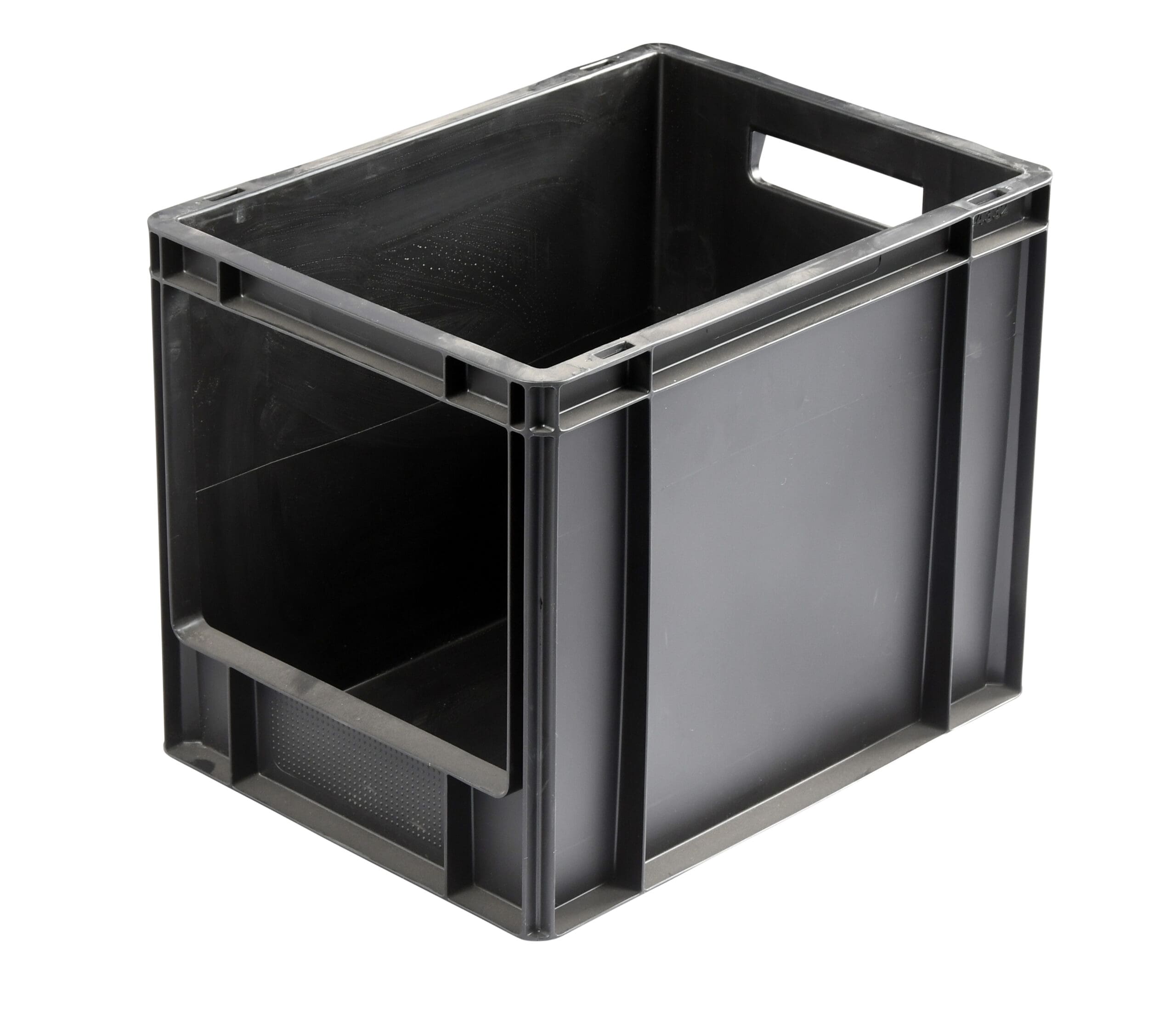
    By contrast, plastic boxes offer a range of advantages. They are not likely to break and they are waterproof and therefore offer protection against moisture. They usually come with some sort of handles, making them easier to move.

    While cardboard can be recycled, it has a limited lifespan because heavy objects will soon wear a box out. A tough plastic box is actually a better environmental prospect because it can be used time and time again, in contrast with the single-use plastic that causes so many problems elsewhere.

    So if you need to store lots of books somewhere safe, heavy duty bookshelves and plastic crates make the ideal combination.